 Jibrin
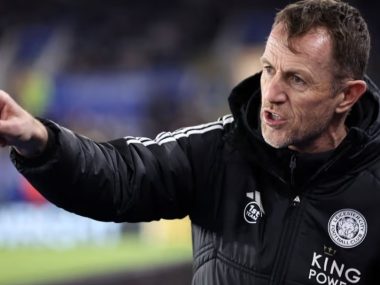
You can’t just wave a magic wand and fix everything overnight,” Gary Rowett admitted after his Leicester debut. That’s certainly true. The same old frailties that have plagued City all season were evident again at Stoke.
City conceded inside the opening 10 minutes for the 11th time this campaign—four more than anyone else in the division. They also shipped a result-changing goal in the final 15 minutes for the seventh different game, the most in the league. Both goals came from crosses, a weakness Andy King highlighted just over a week ago.
Rowett has been hired as a firefighter, but there are too many fires that have been raging for months. However, one was extinguished. After Ben Wilmot’s 89th-minute equaliser, it would have been easy to expect a collapse. The Southampton horror show was still fresh, and the 2,800 travelling fans feared another late implosion. Instead, City responded superbly, creating three chances that should have been buried by Joe Aribo or Luke Thomas. If a draw was fair at 90 minutes, City arguably deserved victory for their late push.
The second-half fightback, overturning a deficit, and ending a losing streak felt like a small step forward—even with the late equaliser. But the question remains: do City really have time for small steps? Still in the relegation zone, the strides forward need to get bigger.
Biggest Question Over Rowett Style Answered
The biggest question mark over Rowett’s appointment was how a manager known for less possession would handle a squad built to dominate the ball. We now have an answer. City had 55 per cent possession at Stoke, above their season average. If that wasn’t evidence enough, Rowett confirmed it was the gameplan.
Discussing Harry Winks, he said: “Winksy can control games in the Championship. For us at the moment, we’re better controlling the game with the ball than without it. He’s going to be a key player.” The doubts over how City would play naturally led to doubts over Winks, the player most symbolic of a possession-based system. He could have been sidelined for more physical options like Oliver Skipp or Joe Aribo. But by anchoring the team around Winks, Rowett has signalled he plans to keep the ball.
Two Subs and Aribo on the Wing Reveals Squad Stance
Rowett used just two substitutions at Stoke, the fewest City have made all season. Given Luke Thomas’s introduction for Victor Kristiansen was injury-enforced, Rowett might have preferred just one change. That one substitution was telling: he brought on Aribo for Jeremy Monga in an unfamiliar right-wing role, overlooking three natural wingers in Silko Thomas, Wanya Marcal, and Dujuan Richards.
Rowett has repeatedly mentioned the injury list, which now stands at nine after the surprise absences of Abdul Fatawu and Jordan Ayew. He feels City’s woes are partly down to these injuries. The limited subs, the use of Aribo out wide, and his frustration over absent senior players all suggest Rowett will lean on experience.
Yes, 18-year-old Divine Mukasa and 16-year-old Jeremy Monga started—but they are already performing. Other youngsters may not get the same opportunity. “The squad’s where it is,” Rowett said. “We’ve lost big, key players. We need to get players back for a more mature bench. We’ve got great young lads, but when you’re under pressure at this stage, you want calmer heads that have done it before.”
Creative Heart Mukasa Can Be City Saviour
Two goals and two assists in two league starts for Mukasa—and he arguably could have had more. For all Rowett’s talk of experience, it was an 18-year-old who was City’s star man. After a quiet first half, he came alive after the break. His goal was a devilish cross that deceived the keeper. His back-heel to set up Winks was sublime. A pass through a defender’s legs to tee up Stephy Mavididi nearly brought another assist, as did his late cross to Aribo and a perfect delivery to Luke Thomas for what should have been a winner.
In total, Mukasa played six key passes—the most by a City player in any game this season. The teenager is not just a star of the future; he could be City’s saviour now. “Divine has a lovely balance and elegance,” Rowett said. “First half, he tried to force things. Second half, he settled down. By getting him in that pocket, he linked well with Stephy and caused Stoke real problems.”
In the Championship, Survivors Cause Upsets
Ordinarily, an away point is a good point. But this result doesn’t feel like it’s gained City much ground. They are now just a point behind West Brom, but several relegation rivals pulled off excellent results. Blackburn won the Lancashire derby. Portsmouth won at high-flying Millwall. Charlton and Oxford claimed draws at Southampton and Middlesbrough—tougher places to visit than Stoke right now.
The nature of the Championship means relegation battlers can regularly upset the odds. City are going to have to start doing that soon. They have, marginally, the toughest remaining fixture list based on opponents’ points-per-game ratios. To survive, they must start causing upsets.


 Jibrin